Amazon Unveils Ring Drone Cam: A Home Drone Featuring 2K Video, AI, and Autonomous Patrolling
Amazon's Ring Drone Cam: 2K Camera, Autonomous Patrolling, AI Pilot System, Mobile Home Surveillance—Features and Limitations

The device moves between rooms on its own, avoids obstacles, responds to security system alerts, and returns to its charging station. Equipped with a 2K camera and the AI Pilot navigation system, the drone can stay airborne for up to eight minutes. US sales are scheduled for January 27, 2027, at a price of $249.99.
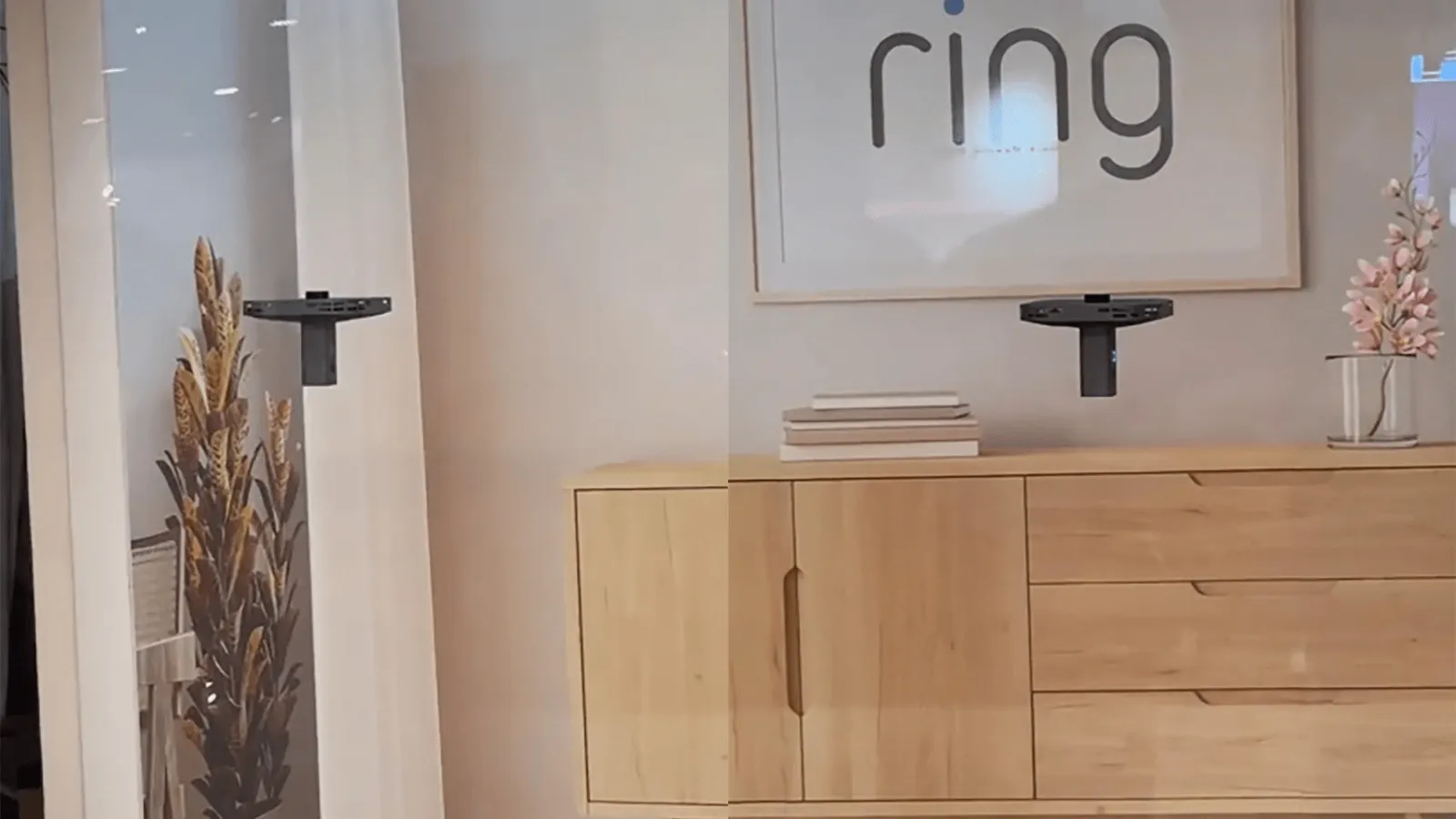
On November 10, 2026, Amazon announced its new Ring Robotics division, introducing two devices designed for autonomous video surveillance. The first is the Ring Drone Cam, a small quadcopter for apartments and houses. The second is the Ring Rover Cam, a wheeled ground robot primarily intended for commercial spaces.
The core idea behind the Ring Drone Cam is to replace multiple stationary cameras with a single mobile device. Instead of constant recording from a fixed point, the drone can independently fly to a specific room, check on things, and send the footage to the owner via the Ring app.
How the Flying Camera Works
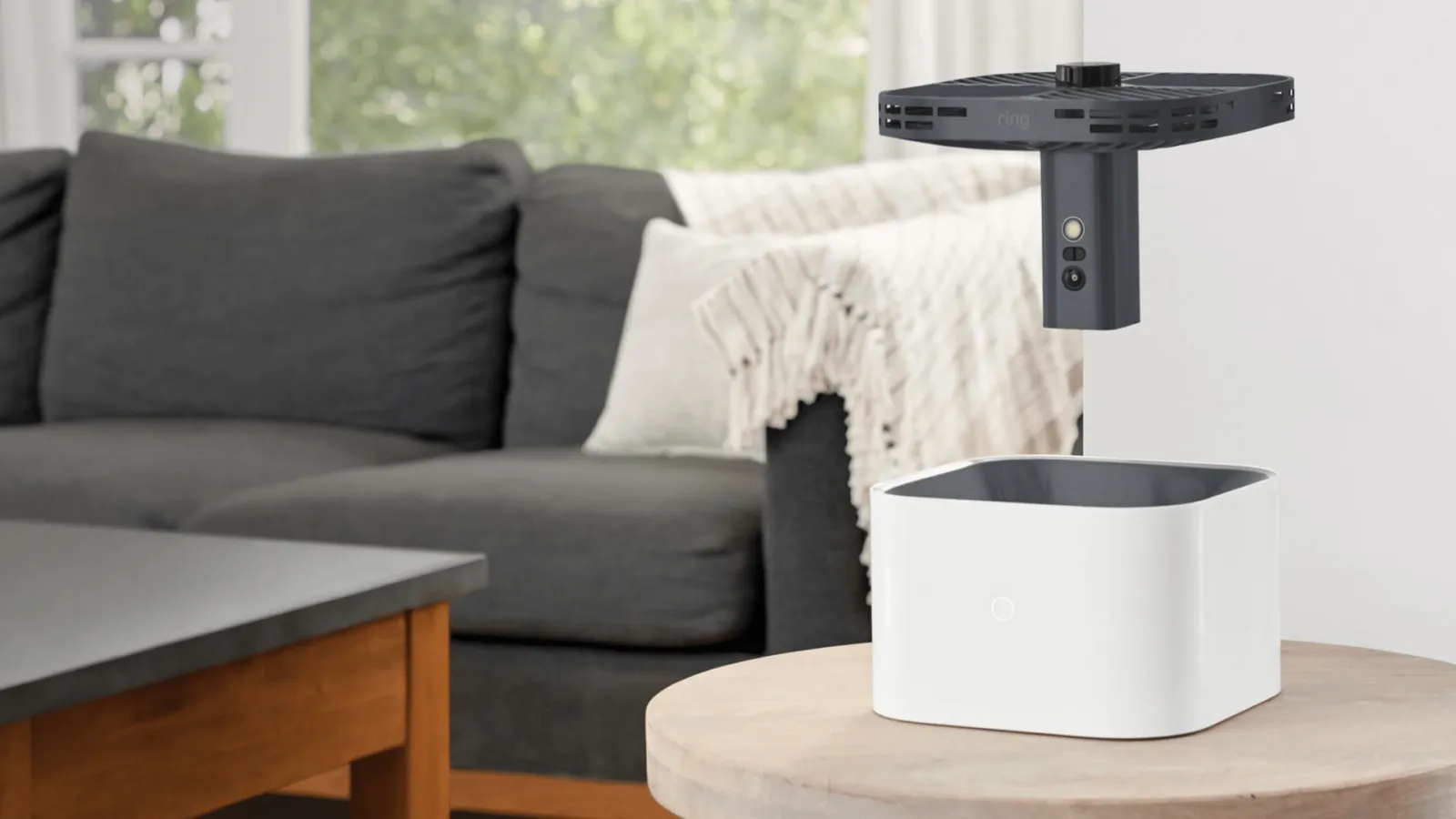
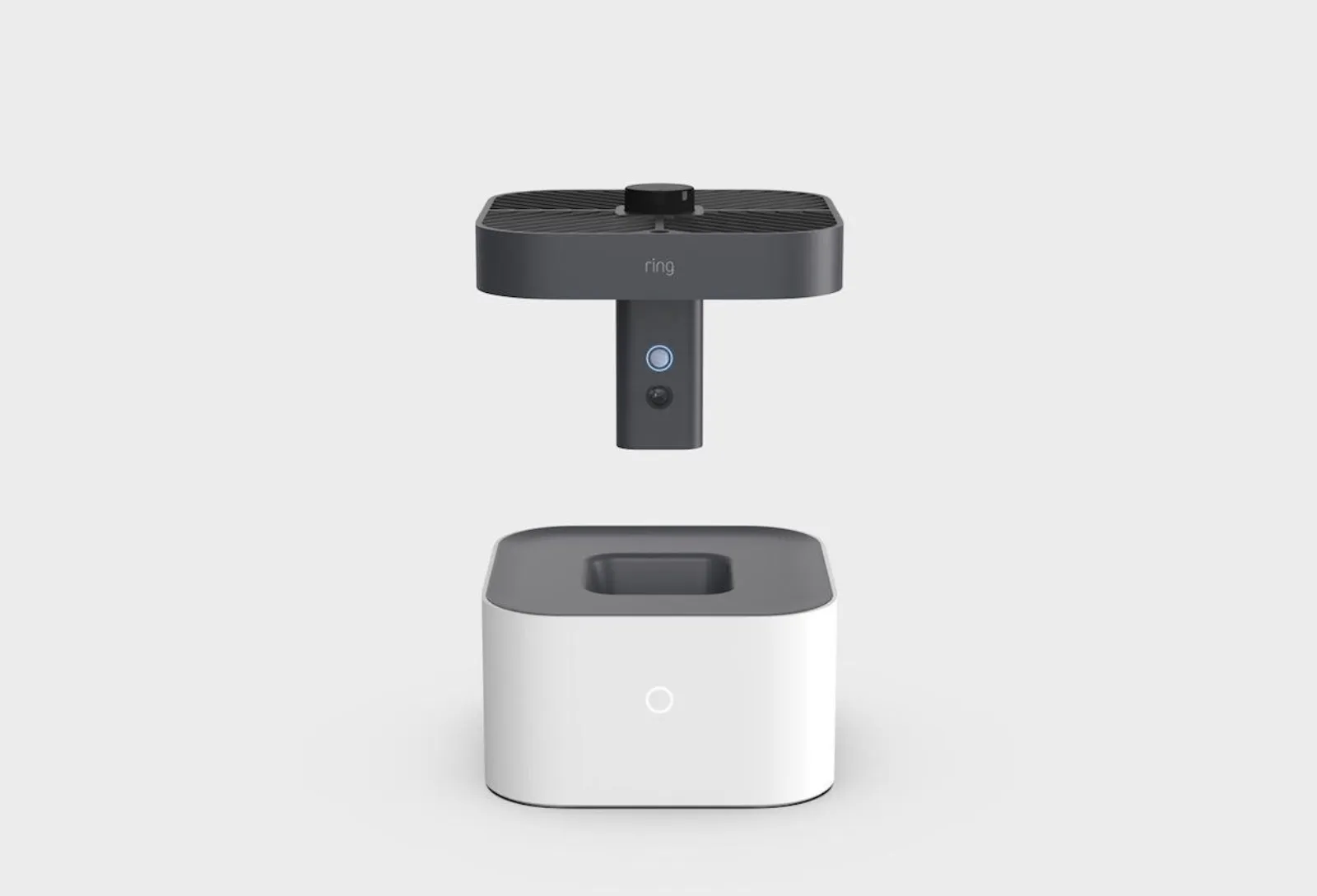
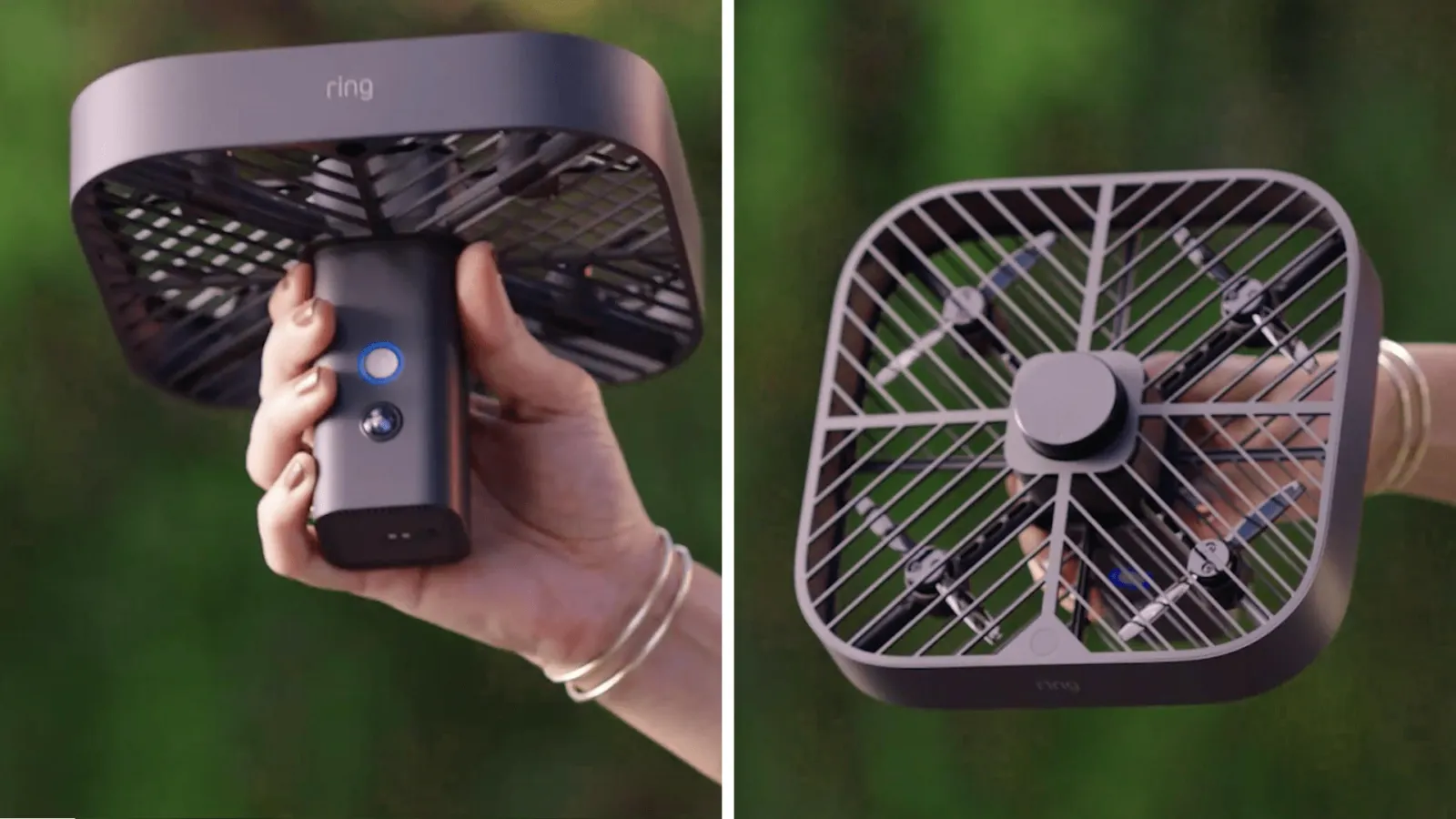
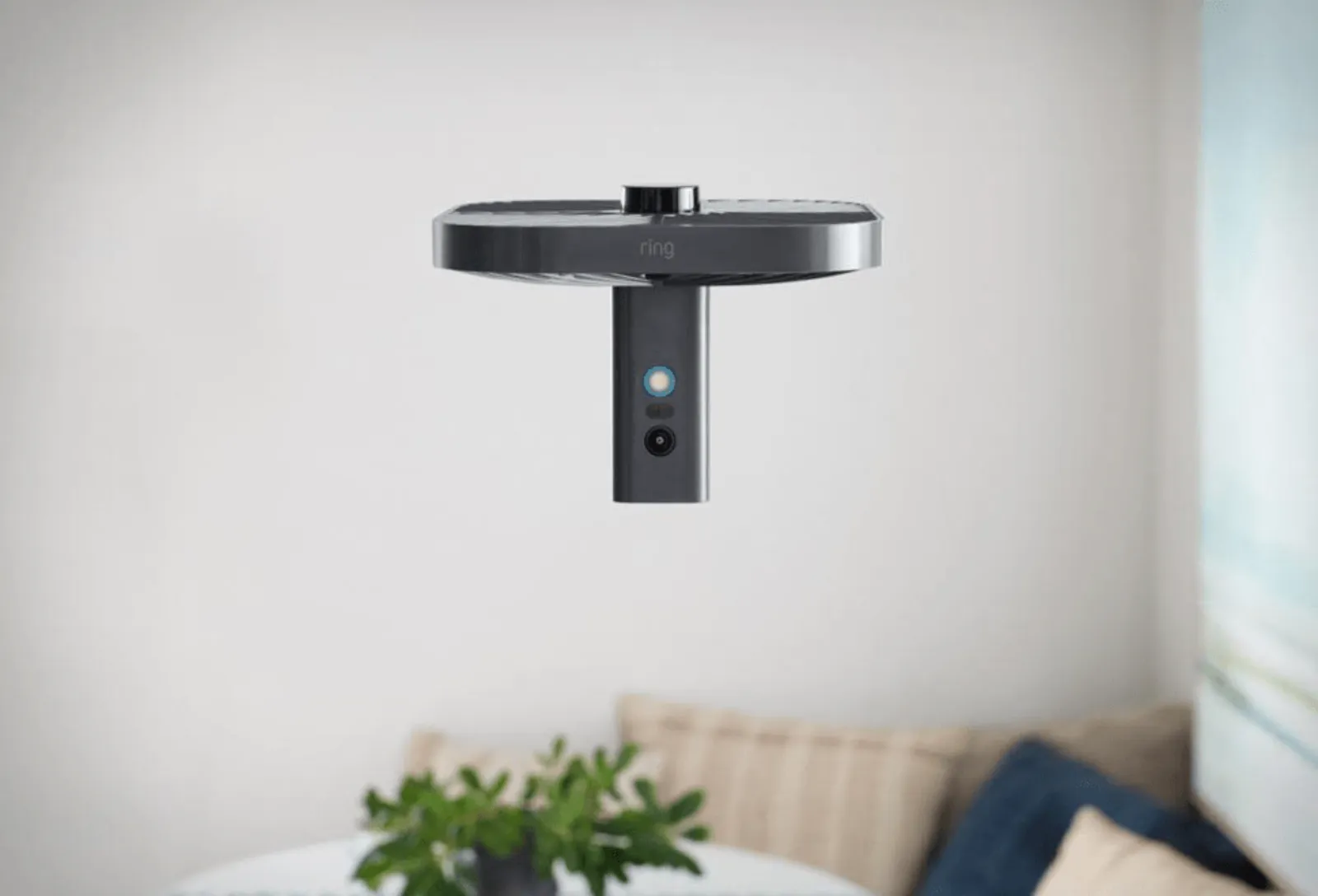
The Ring Drone Cam is a compact quadcopter weighing just 165 grams. Its dimensions are approximately 17 × 14 × 3 centimeters, allowing it to navigate indoor spaces and pass through standard doorways.
Navigation is powered by the AI Pilot system, which integrates data from cameras, built-in sensors, specialized computer vision models, and cloud computing. During initial setup, the drone scans the room to create a map, after which the user can set patrol routes and waypoints.
Unlike a standard quadcopter, the Ring Drone Cam does not require constant manual control. The owner selects which rooms need checking, and the system independently plans its flight path, attempting to avoid furniture and other obstacles.
For example, if a user is at work and receives a notification from a Ring motion sensor, the drone can fly along a pre-saved route to show what is happening in that part of the house. Similarly, the device can be launched manually via the app or used for regularly scheduled checks.
However, the drone cannot explore any space at will without prior setup. Its performance depends on the room map, saved routes, lighting conditions, and the quality of the wireless connection.
2K Camera and 360-Degree View
The Ring Drone Cam features a camera with a 1920 × 1920 pixel resolution. The square aspect ratio provides a sufficiently wide view of the surroundings, with a field of view of 148 degrees both horizontally and vertically.
The camera supports 360-degree rotation, allowing the drone to inspect different directions without needing to constantly reposition the entire body. To handle low-light conditions, two LED spotlights are included, which turn on automatically when needed.
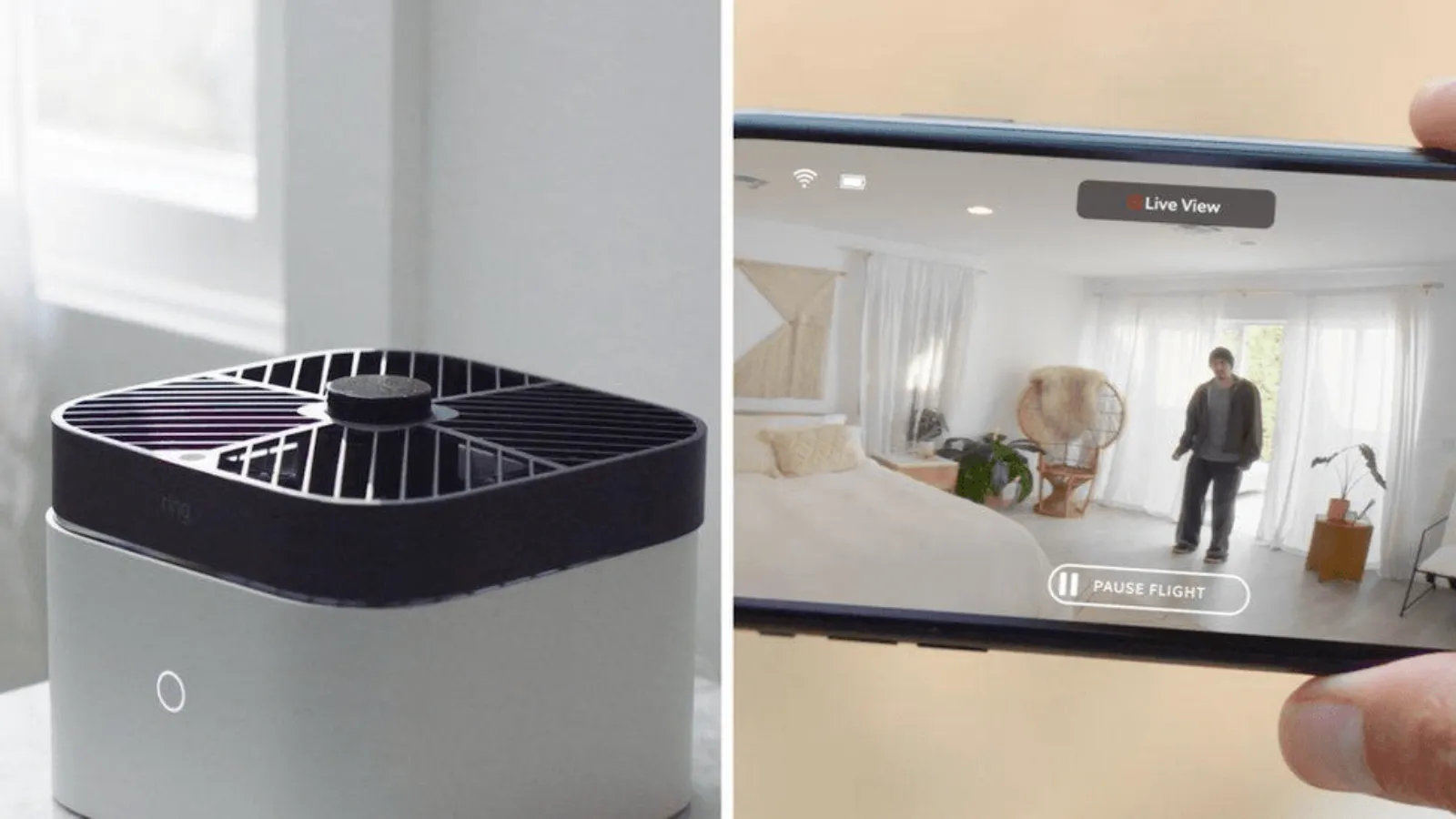
Video is streamed through the Ring app. Owners can monitor live footage and, with a compatible subscription, save video recordings and view event history.
That said, the device is not equipped with a microphone or speaker. It is designed strictly for visual surveillance, so you won't be able to talk to people through the drone like you can with some other Ring cameras.
Only Eight Minutes of Flight Time
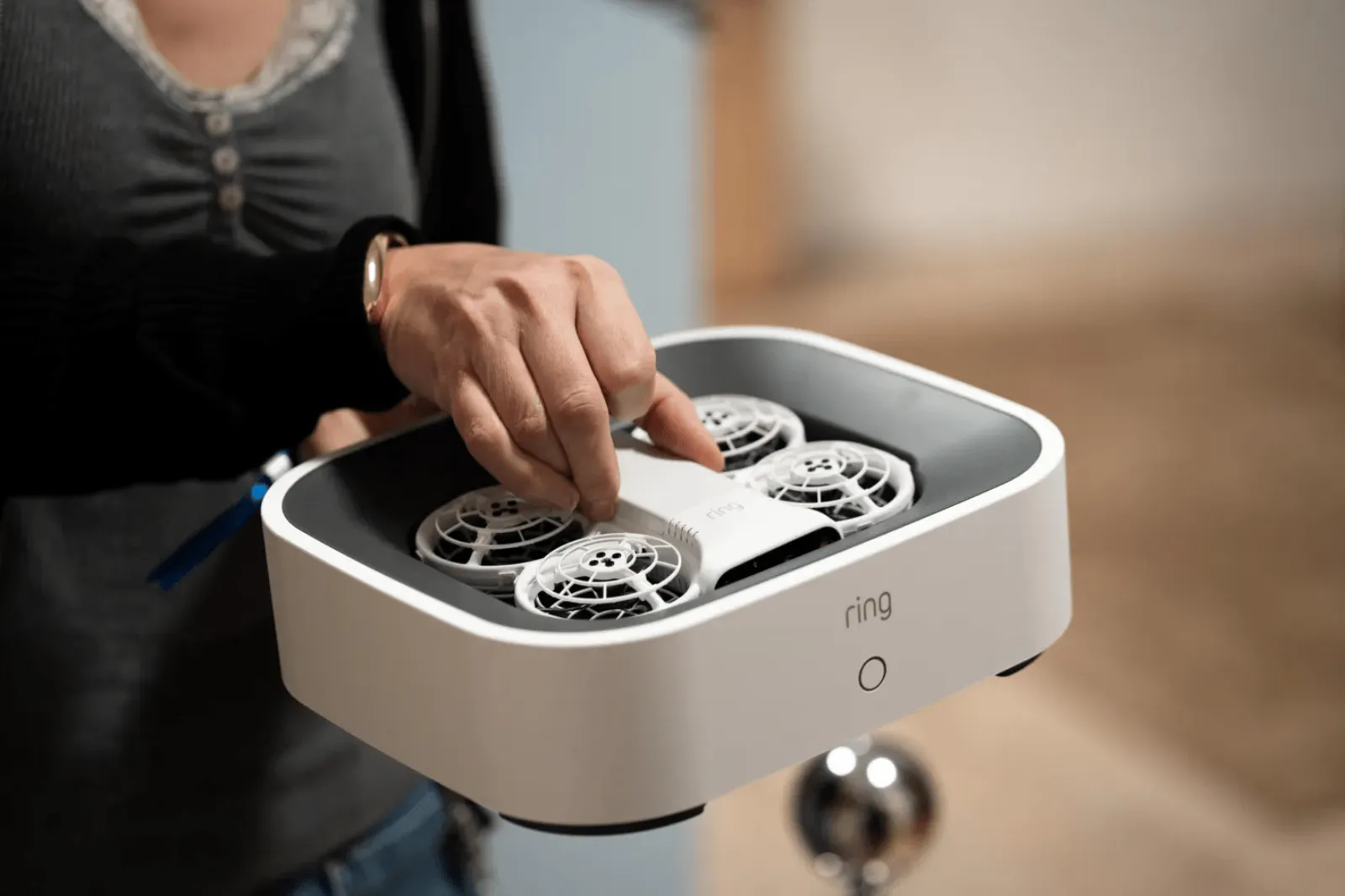
The primary technical limitation of the Ring Drone Cam remains its battery life. According to official specs, a full charge lasts a maximum of eight minutes under controlled conditions. In a real-world home setting, runtime may be even shorter due to flight paths, battery health, and environmental factors.
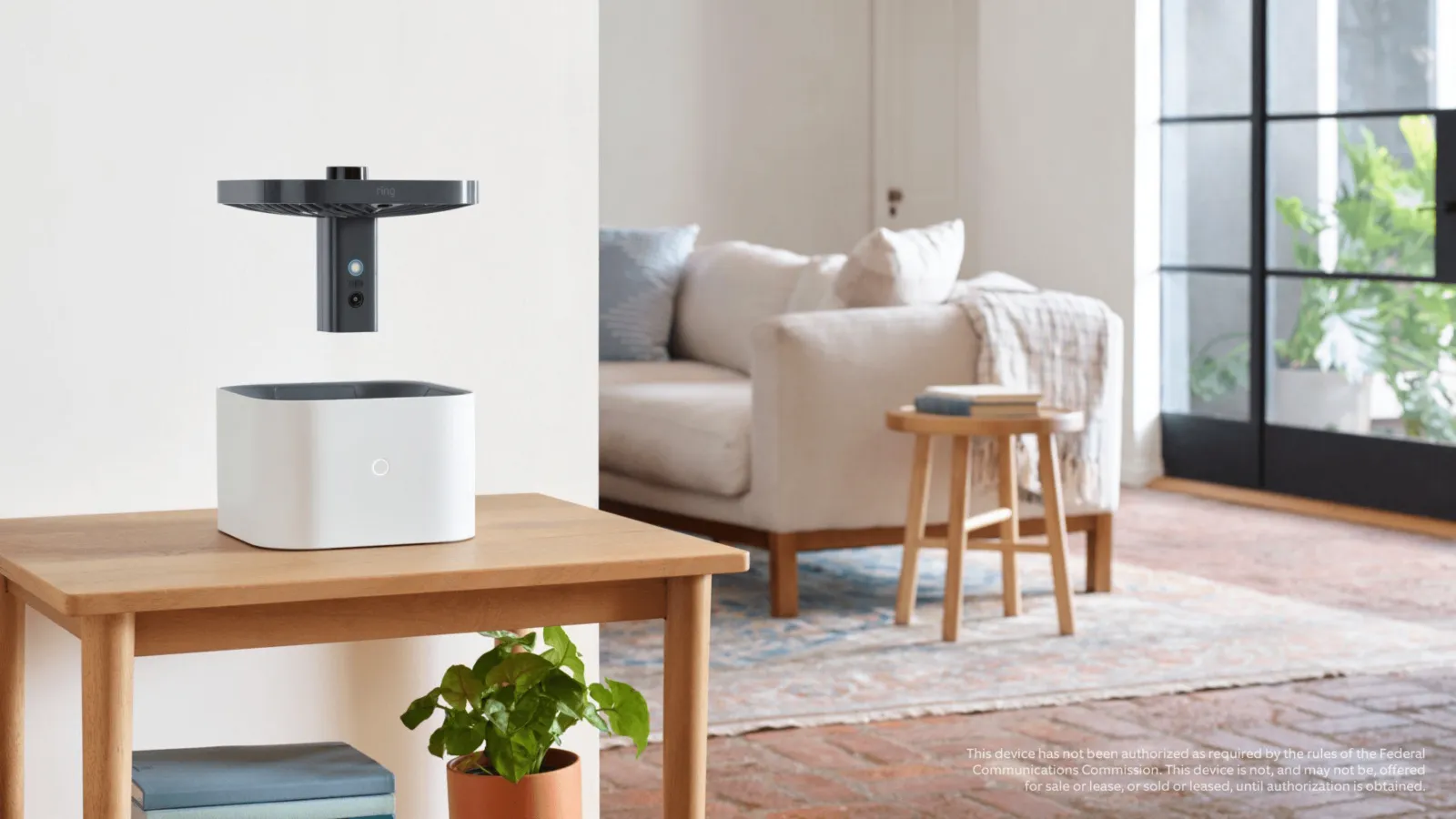
Once its patrol is complete, the drone returns to its charging station. Based on preliminary demonstrations, charging takes approximately eight minutes for every one minute of flight. This means recharging after a long flight could take about an hour.
This implies that the Ring Drone Cam is not intended for continuous surveillance. Its purpose is to perform short checks of specific rooms rather than constant, around-the-clock patrolling.
This scenario differs from stationary cameras, which can monitor a specific zone 24/7. Therefore, the new drone is more of a supplement to an existing security system rather than a total replacement for traditional surveillance.
Why AI Navigation Isn't Always Perfect
Despite the use of AI Pilot, Amazon warns of several limitations. Navigation may struggle in rooms with reflective surfaces, such as polished marble, wet tiles, large mirrors, and transparent glass partitions.
Issues may also arise in rooms with plain, monochromatic walls that lack visual landmarks. Such surfaces are difficult for computer vision systems because the algorithms need to find stable features in the environment to determine their own position.
Another limitation involves floor levels. At the time of the announcement, the Ring Drone Cam is designed for use within a single floor. Support for multi-story buildings is mentioned as a possible future improvement.
The drone also relies on WiFi connectivity and Ring's cloud infrastructure. Therefore, it cannot be considered a fully autonomous system capable of performing all functions without internet access.
Privacy Concerns: A Camera That Can Fly Into Your Bedroom
The introduction of a flying camera inside the home inevitably raises privacy questions. Unlike a stationary device pointed at a specific door or hallway, the Ring Drone Cam can potentially move between different rooms and record areas where cameras are not typically installed.
Amazon has included several safeguards. When the drone is on its charging station, its camera is physically covered, and recording is disabled. Video capture is only possible during flight, which is accompanied by motor noise and light indicators.
The company also claims to use video data encryption. However, a full privacy assessment must consider not just the camera itself, but also cloud processing, data storage, access controls, and the terms of the Ring subscription.
Crucially, AI Pilot relies on cloud computing for navigation. This means certain functions depend on external infrastructure, making the processing of information regarding a home's internal layout a vital aspect of evaluating the device.
Furthermore, owners will need to consider the privacy of guests and other family members. The ability to remotely send a camera into different rooms creates a completely different level of surveillance compared to a standard video doorbell.
Amazon has tried to release a drone like this before
Ring's idea for a flying home camera predates the current announcement by quite a while. As far back as September 2020, the company introduced the Always Home Cam, a device with a similar concept of autonomous indoor patrolling.
The original model was intended to fly autonomously along pre-set routes, react to security system alerts, and return to its charging station. However, the project never reached wide release. Access was limited, and eventually, the device effectively vanished from Ring's mainstream product lineup.
Six years later, Amazon is returning to this idea with a more compact design, an improved camera, and the AI Pilot navigation system. The new model weighs 165 grams and differs significantly from the early prototype.
That said, the core limitations of the concept remain the same: short flight times, the need for manual route configuration, dependence on the surrounding environment, and privacy concerns.
<p>How much does the Ring Drone Cam cost and when will it be available?</p>
Amazon has set the price of the Ring Drone Cam at $249.99. Sales in the US are scheduled to begin on January 27, 2027, though the device still needs to receive approval from the US Federal Communications Commission (FCC).
For now, customers can sign up to receive notifications regarding product availability. Full-scale sales are not possible until the necessary authorization is obtained.
Some features will require a Ring Protect subscription. Specifically, a paid plan is necessary for scheduled automated patrols, as well as for saving and viewing video history.
At the time of the announcement, the company did not disclose the release dates for the Ring Drone Cam in Europe, including Spain. Therefore, the official price in euros and availability in the European market are currently unknown.
Simultaneously, Amazon introduced the Ring Rover Cam, a larger robot designed for commercial spaces. It moves on wheels and is equipped with a camera capable of up to 4K resolution, a two-way communication system, and additional alert features. It is priced at $999.99, with US shipments scheduled to begin in December 2026.
<p>Can a flying drone replace standard cameras?</p>
The main advantage of the Ring Drone Cam is its mobility. A single camera can sequentially check multiple rooms without requiring separate devices in every area. This is particularly interesting for owners of large homes who need to periodically monitor different zones.
However, the concept has significant limitations. An eight-minute flight time is not enough to organize continuous surveillance, and long charging times limit the frequency of patrols. The drone may also struggle in rooms with complex layouts, mirrored surfaces, and transparent partitions.
Practical everyday issues cannot be ruled out either. The noise from the propellers might disturb pets, and the need to keep flight paths free of obstacles creates additional operational requirements.
Therefore, in its initial stage, the Ring Drone Cam will likely appeal to users who are already part of the Ring ecosystem and want extra visual information when sensors or alarms are triggered.
<p>What's next?</p>
The Ring Drone Cam represents yet another attempt to bring autonomous robotics technology into everyday life. Amazon is combining computer vision, cloud-based AI models, navigation algorithms, and home security devices into a single compact product.
Currently, its capabilities are limited to short indoor routes. However, advancements in batteries, sensors, and edge computing could potentially allow for more autonomous devices capable of longer operation without recharging and more confident navigation in complex environments.
In the long term, similar robots could be used not just for security, but also for remote inspections of premises, equipment monitoring, and other tasks where a mobile camera is required.
The Ring Drone Cam does not replace a full-scale video surveillance system, but it offers a new home security scenario: instead of dozens of stationary cameras, the user gets a single robot that independently heads to wherever a check is needed.
The main question now is whether this idea will prove convenient and reliable enough for everyday use. Amazon already attempted to bring a similar product to market in 2020. By January 2027, it will be clear whether this second attempt can evolve into a mass-market device.
If you are interested in AI, technology, and the future—welcome to my channel to discuss and share updates.
Translated from Russian. Original on vc.ru: Amazon представила Ring Drone Cam: домашний дрон с камерой 2K, искусственным интеллектом и автономным патрулированием