JEDEC Announces DDR6: Next-Gen RAM for the AI Era
JEDEC's DDR6, new memory for AI, high bandwidth, processor compatibility, improved data processing, transition to new technologies

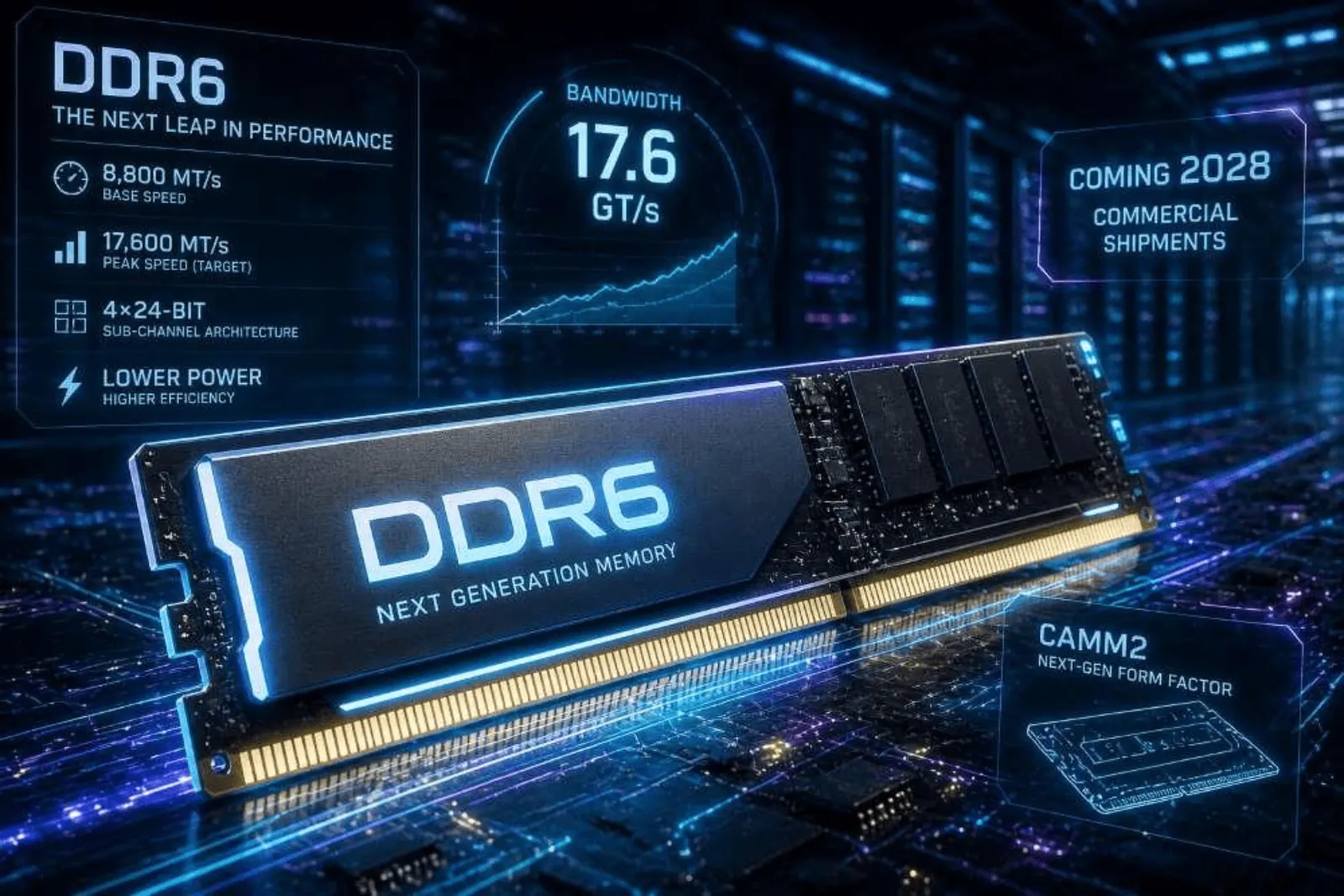
The new memory is being developed to meet the growing demands of artificial intelligence, cloud platforms, and high-performance computing. The primary goal is to increase bandwidth and data processing efficiency.
Modern processors and accelerators are becoming increasingly powerful, yet computing performance is increasingly bottlenecked by the data transfer speeds between the CPU and RAM. This issue is particularly noticeable when working with massive datasets, server applications, and artificial intelligence.
DDR6 is set to be the next stage in the evolution of RAM. JEDelC is developing the standard in collaboration with chipmakers, processor manufacturers, and computer hardware vendors to ensure compatibility for future devices.
What will change compared to DDR5?
DDR6 is expected to provide significantly higher memory bandwidth. Industry preliminary estimates suggest speeds ranging from 8,800 to 17,600 MT/s, whereas the DDR5 standard began at 4,800 MT/s.
However, these figures should not yet be considered the final requirements of the approved standard. Architecture, power consumption, supported configurations, and the actual speeds of commercial modules will depend on JEDEC's final specification.
DDR6 will also require compatible memory controllers and motherboards. Therefore, it will likely be impossible to install new modules into existing DDR5-based computers.
Why does this matter for AI?
Modern AI models require not only high computing power but also rapid access to massive amounts of data. If a processor is forced to wait for information from memory, additional computing cores cannot provide the expected speedup.
DDR6 has the potential to reduce these bottlenecks in server systems, workstations, and computers performing AI tasks locally.
That said, the new RAM will not replace HBM, which is used by modern GPUs. DDR6 and HBM serve different purposes and will most likely continue to evolve in parallel.
When will DDR6 arrive?
JEDEC has only presented a preliminary overview of the technology, not a finished specification for a mass-market product. The next step will be the alignment of technical requirements, after which manufacturers can begin creating compatible controllers, chips, and memory modules.
The transition to DDR6 will be gradual. The technology will likely appear first in specialized high-performance systems before spreading to the broader market.
If you are interested in AI, technology, and the future—welcome to my channel to discuss and share updates.
Translated from Russian. Original on vc.ru: JEDEC анонсировала DDR6: оперативная память нового поколения для эпохи ИИ