A $399 robot duck has learned how to walk, fall, and stand back up. Now, anyone can teach it new moves!
The Microduck robot by Pollen Robotics is bipedal, capable of walking, standing, and learning new movements. It features open-source code and is ready for experimentation, simulation, and training.

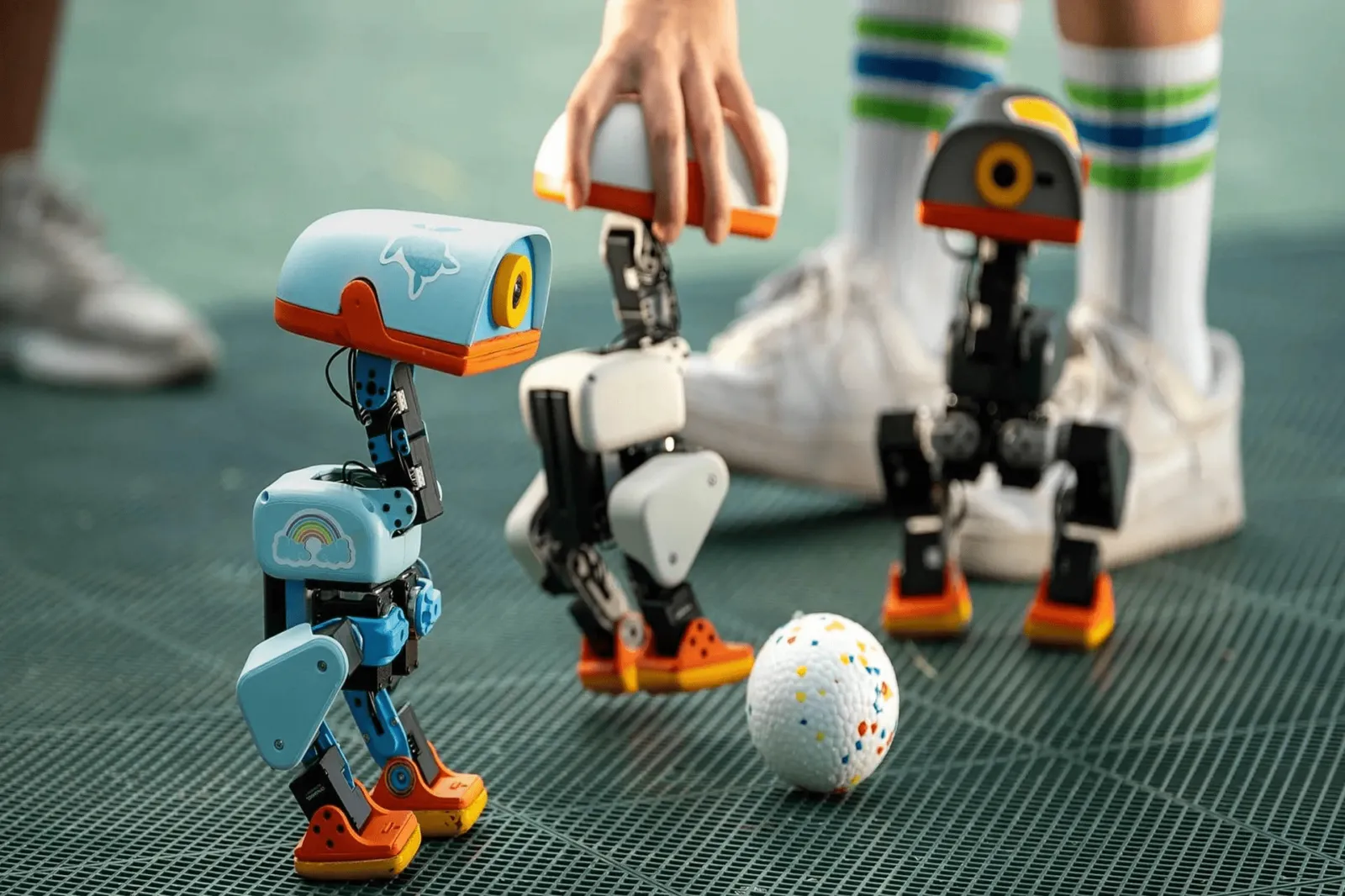
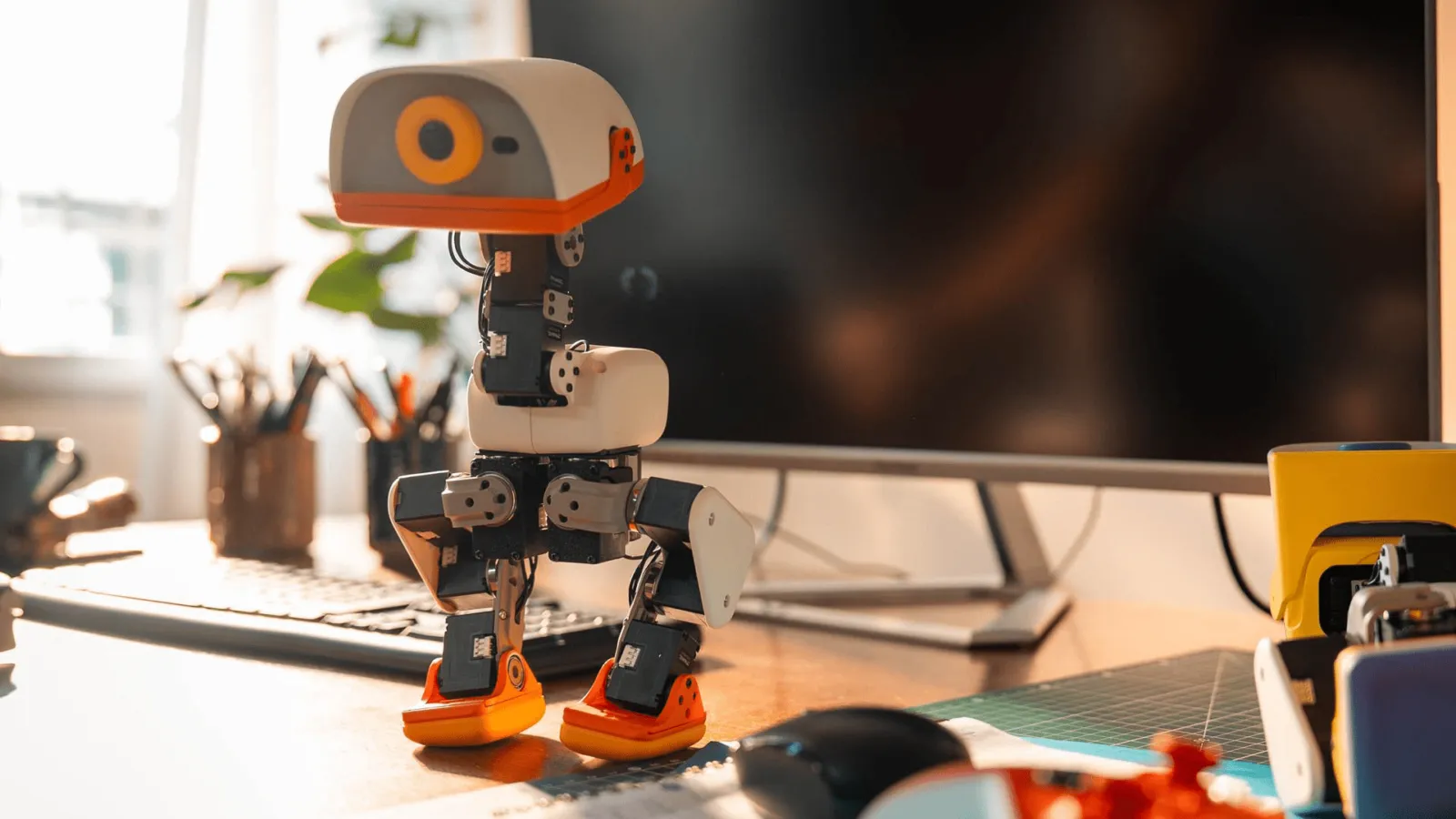
France's Pollen Robotics, a Hugging Face company, has introduced Microduck, a miniature bipedal robot that can walk, squat, pick up small objects with its beak, and stand up on its own after falling. It stands just 25 centimeters tall and weighs about 780 grams.
But the key difference between Microduck and typical programmable toys lies in how it learns. New movements can first be practiced in a computer simulation and then transferred to the physical robot. Furthermore, the developers have released the source code, training tools, and ready-to-use behavior models.
A tiny robot with 15 motors
Inside the Microduck are 15 electric motors that allow control of the legs, head, and a movable beak. The robot is equipped with a wide-angle camera, a small 8x8 lidar, two inertial sensors, microphones, a speaker, and NFC antennas.
Computing is handled by a Rockchip RK3566 processor with an AI accelerator. The device features 1 GB of RAM and 32 GB of onboard storage. The battery provides approximately one hour of operation.
A game controller is included in the kit, so no programming is required for your first encounter with the robot.
The manufacturer has provided seven ready-made behavior models. Microduck can walk, maintain balance, sit, stand, recover from falls, grab objects, and move using special wheeled attachments.
In demonstration videos, several robots even play soccer and participate in small competitions.
How do you teach Microduck a new movement?
The most interesting part of the project involves reinforcement learning.
The developer launches a virtual copy of Microint Microduck in the MuJoCo physics simulator. Then, they set a goal—for example, teaching the robot to walk faster, turn, or maintain balance after a nudge.
The algorithm tries various actions repeatedly. It receives a positive reward for successful movements and a negative one for failures.
After a vast number of attempts, a neural network control model is formed, known as a behavior policy.
The finished model is exported in ONNX format and loaded onto the physical robot. On the device, it runs in a control loop at a frequency of 50 Hz.
If the movement in reality differs from the behavior of its digital twin, the developer can adjust the simulation parameters and repeat the training.
This way, the riskiest experiments can be conducted without any physical hardware.
Open source instead of a closed toy
Pollen Robotics has published the Microduck software infrastructure on GitHub.
The open access includes the device control code, simulation tools, reinforcement learning algorithms, ready-made behavior models, and tools for transferring results to real hardware.
MuJoCo and the PPO algorithm are used for training, while the control models are exported to ONNET.
The software stack is distributed under the Apache 2.0 license, allowing you to study, modify, and use the code in your own projects.
This is particularly interesting for students, independent engineers, and research labs in need of an affordable platform for experimenting with physical AI.
That said, the openness of the software does not mean that full documentation for DIY manufacturing of the mechanics and electronics has been published.
How much does Microduck cost?
Pre-orders opened on August 27, 2026. The base price is $399, excluding taxes and shipping.
The kit includes the robot, a battery, a USB-C cable, and a game controller.
Additional options include a $39 charging kit with two batteries, a $119 developer kit with spare motors and parts, and a $39 accessory kit with wheels, a ball, and NFC tags.
The robot is available in four colors: Cream, Graphite, Lavender, and Sky.
The first shipments are scheduled before Christmas 2026. Initial markets include Europe, the UK, North America, and parts of Asia.
Why is Microduck more interesting than a standard robotic toy?
Today, training complex movements often requires expensive equipment, specialized labs, and significant computing resources.
Microduck offers a more accessible model.
You can modify an existing gait model, train a new movement, or test your own control algorithm.
Pollen Robotics also hopes that users will publish their created behavior models and share them through the Hugging Face community.
In the long run, this could lead to the emergence of public libraries of robotic skills that can be reproduced and improved.
Of course, Microduck is not yet a universal autonomous robot. Its capabilities are limited by its size, actuator power, sensors, and computing resources.
However, for learning robotics and testing algorithms on real hardware, it offers an extraordinary combination of capabilities.
If you are interested in AI, technology, and the future—welcome to my channel to discuss and share updates.
Translated from Russian. Original on vc.ru: Робот утка за $399 научился ходить, падать и вставать. Теперь любой может обучить его новым движениям!